The Power of Judicial Review Allows the Supreme Court to Apex
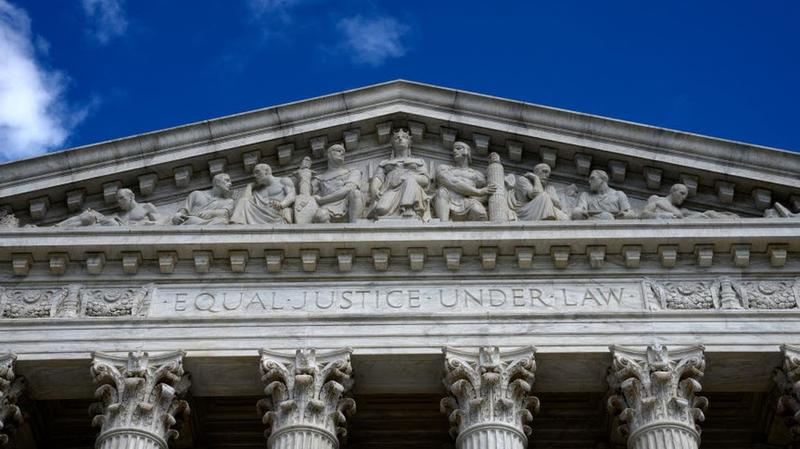
In the United States, democracy relies on maintaining a rest of power between three key branches: the executive branch, the legislative co-operative, and the judicial co-operative, which is where the Supreme Court (SCOTUS) resides. Deemed experienced legal experts, the Chief Justice and 8 Associate Justices who sit down on the court have the terminal say when it comes to interpreting American laws and the Constitution.
Every bit such, the Supreme Court obviously plays a powerful role in confirming or denying legal rights and practices in the U.S., and, at times, the Courtroom's decisions have completely altered the cloth of life in America and the course of the nation. For example, the Court ruled on landmark cases such as Brown v. Lath of Education, which outlawed racial segregation in public schools, and Roe v. Wade, which legalized abortion. More recently, the Court'southward ruling on Bostock v. Clayton County ensured that under Championship VII of the Ceremonious Rights Act of 1964, LGBTQ+ workers are protected from workplace bigotry. Needless to say, the Court's rulings are as important every bit ever.
Of course, similar any part of a branch of authorities in the U.Southward., the Supreme Court is subject to checks and balances; presidents accept the power to appoint new justices when seats on the Court open up upwardly, and the Senate has the power to confirm or reject those appointments. Regardless, the justices who are selected serve for a lifetime — or until they stride down — which means they wield significant power in our democracy. With this in heed, nosotros're taking a look at the current lineup of Supreme Courtroom justices — and how their histories with interpreting the law might shape our land in the coming years.
John G. Roberts Jr., Chief Justice | September 29, 2005
President George W. Bush appointed John Glover Roberts Jr. to the Supreme Court in 2005, making him the Court'due south 17th Master Justice. Built-in in Buffalo, New York, Chief Justice Roberts earned both his available's and law degree from Harvard University. In the lead upward to his SCOTUS appointment, the Harvard grad held many respected legal roles, including Associate Counsel to President Ronald Reagan from 1982 to 1986; Principal Deputy Solicitor General for the U.S. Section of Justice from 1989 to 1993; and Appellate Judge on the United States Courtroom of Appeals for the District of Columbia Circuit in 2003.
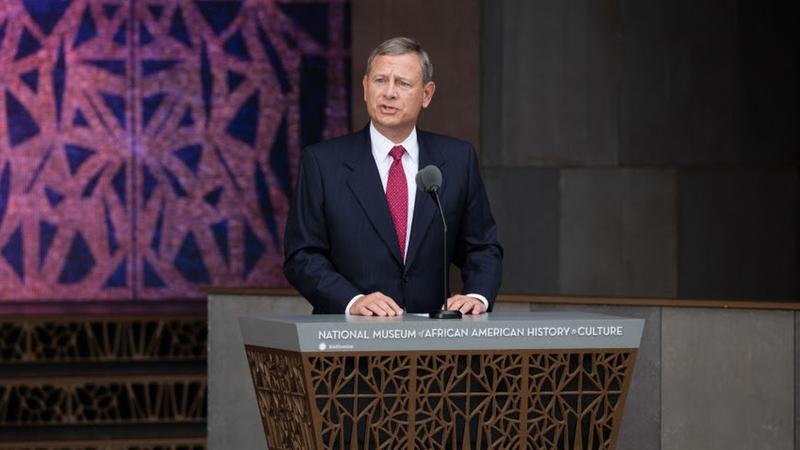
In terms of his general political philosophy, Chief Justice Roberts leans toward more conservative points of view. At the same time, he strongly believes the Court just interprets laws that already exist and that they aren't in the business of making laws. This belief has led him to oppose the wishes of the Republican party on several landmark cases, including Obergefell v. Hodges, which made same-sex wedlock a ramble right, also as National Federation of Contained Business concern v. Sebelius and King v. Burwell, which upheld the constitutionality of different aspects of the Affordable Care Human action.
Clarence Thomas, Acquaintance Justice | October 23, 1991
In 1991, President George H.W. Bush appointed Clarence Thomas to the Supreme Court every bit an Associate Justice. Born merely outside of Savannah, Georgia, the future SCOTUS justice attended the College of the Holy Cross earlier earning his police degree from Yale Law Schoolhouse. Later graduation, Thomas served as Assistant Chaser Full general of Missouri from 1974 to 1977; Chairman of the U.S. Equal Employment Opportunity Commission from 1982 to 1990; and Appellate Judge on the United states of america Courtroom of Appeals for the District of Columbia Circuit from 1990 to 1991.
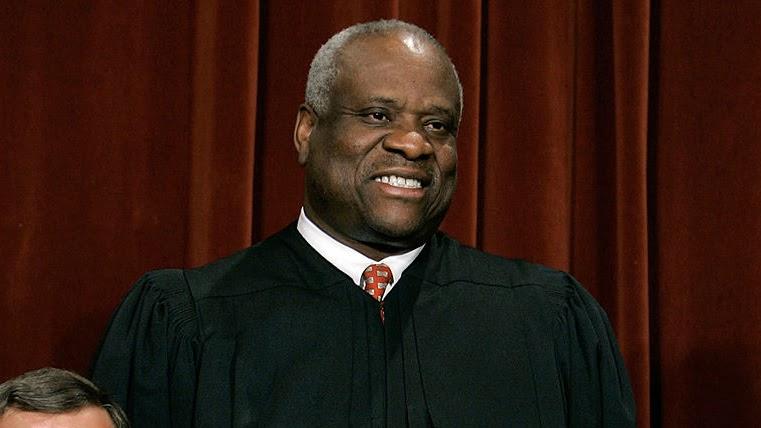
For the most part, Thomas is known as an "originalist" — that is, he looks at constitutional issues based on the original intentions of the founding fathers, regardless of how life may have changed during the interceding years. Interestingly, Thomas doesn't often participate in oral arguments and, despite contempo Trump Assistants appointments, the University of Michigan ranked him the most conservative justice on the Court past a large margin, as per the university's Martin-Quinn score organisation, a ways of measuring one'due south ideology. Notably, Thomas authored the opinion for Kansas five. March, which upheld the constitutionality of a Kansas death penalty statute.
Stephen M. Breyer, Acquaintance Justice | August 3, 1994
President Bill Clinton appointed Stephen Breyer to the Supreme Court as an Associate Justice in 1994. The San Francisco-built-in justice attended Stanford University and attained a bachelor's in philosophy, earlier studying at Oxford University every bit a Marshall Scholar and earning an LL.B. from Harvard Law School. Early in his career, Breyer gained some familiarity with SCOTUS by serving as a police force clerk for Supreme Court Justice Arthur Goldberg in 1964.
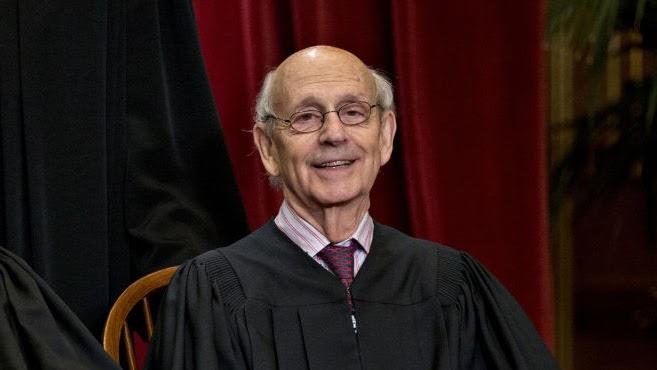
Before returning to the halls of the SCOTUS building, Breyer was also an Banana Special Prosecutor on the Watergate Special Prosecution Force in 1973; taught at Harvard Law School from 1967 to 1994; served for a decade as an Appellate Estimate for the United States Court of Appeals for the Get-go Excursion; and was appointed Primary Guess for said court from 1990 to 1994. Generally, the pragmatic justice is known for his moderate ideology. Similar any good philosophy major, Breyer considers both the existent-world consequences and the original intention of the writers of the Constitution when formulating an stance. Memorably, Breyer wrote the unanimous court opinion for NLRB five. Noel Canning, which limits the recess appointment power of the president.
Samuel A. Alito Jr., Associate Justice | January 31, 2006
In 2006, President George W. Bush nominated Samuel Alito Jr. as an Associate Justice on the Supreme Court. Born in Trenton, New Jersey, Alito attended Princeton University, where he participated in the ROTC program, before setting his sights on Yale Law School. Early in his career, Alito served as a constabulary clerk for Leonard Garth of the United States Court of Appeals for the 3rd Circuit before condign an Assistant U.Due south. Attorney for the District of New Jersey in 1977.
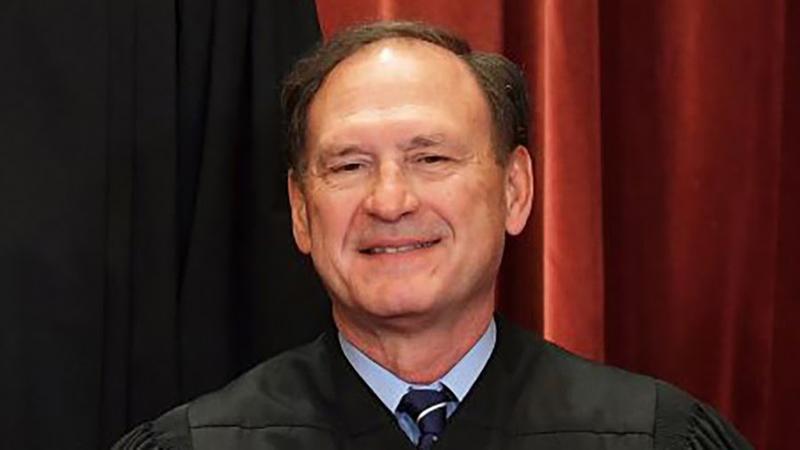
Alito rounded out his resume by working for the U.S. Department of Justice equally Banana to the Solicitor General, Deputy Banana Chaser General and U.Southward. Attorney for the District of New Bailiwick of jersey. Earlier joining the Court, he was appointed Appellate Judge on the Usa Court of Appeals for the Third Excursion in 1990. Although he reportedly evaluates subjects on a instance-past-case basis, Alito generally leans conservative, with his 2019 Martin-Quinn score ranking him the 2d-most conservative justice on the Court. Alito has authored numerous notable opinions, including Mitchell v. Wisconsin, which allows blood alcohol tests on unconscious drivers without a warrant, and Husted v. Randolph Establish, which upheld Ohio'due south methods for maintaining voter registration records.
Sonia Sotomayor, Associate Justice | August 8, 2009
In Baronial 2009, President Barack Obama appointed Sonia Sotomayor to the Supreme Courtroom as the first Hispanic and Latinx Associate Justice and simply the tertiary woman. Born and raised in the Bronx, she was determined to become an attorney afterward being inspired past an episode of Perry Mason. After earning her bachelor's from Princeton Academy, she attended Yale Constabulary School for her J.D. Later schoolhouse, Sotomayor started her career as an Assistant District Attorney in the New York Canton District Attorney's Office in 1979 and then worked every bit an associate and partner for Pavia & Harcourt from 1984 to 1992. In 1991, President George H.W. Bush-league nominated her to the U.S. District Courtroom, Southern Commune of New York, where she served from 1992 to 1998.
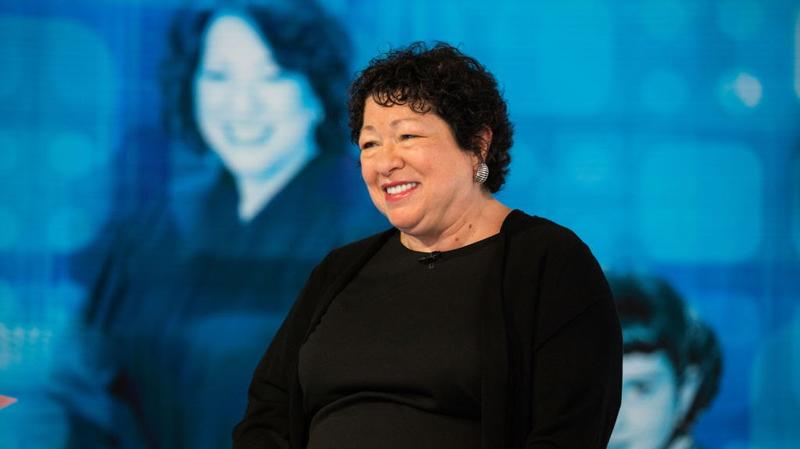
Just prior to her SCOTUS engagement, Sotomayor served every bit an Appellate Judge on the United States Court of Appeals for the Second Circuit from 1998 to 2009. Based on the 2019 Martin-Quinn scores, Sotomayor is the most liberal justice on the Court: She dissented from the majority on the very offset case she heard on the Court — Citizens United v. Federal Election Committee — establishing her every bit a bold, unwavering justice right off the bat. Since then, she has been a primal member in landmark decisions similar Obergefell v. Hodges.
Elena Kagan, Associate Justice | August 7, 2010
A yr after Justice Sotomayor's appointment, President Barack Obama besides appointed the fourth female Associate Justice to the Supreme Court. Built-in in New York City, Elena Kagan earned her bachelor's degree at Princeton Academy, studied at Oxford to attain a Master of Philosophy and and so attended Harvard Law School for her J.D. in 1986. After, Kagan began her legal career equally a clerk for Judge Abner Mikva of the U.Due south. Court of Appeals for the District of Columbia Circuit from 1986 to 1987 and for Justice Thurgood Marshall of the U.Southward. Supreme Court during the 1987 term.
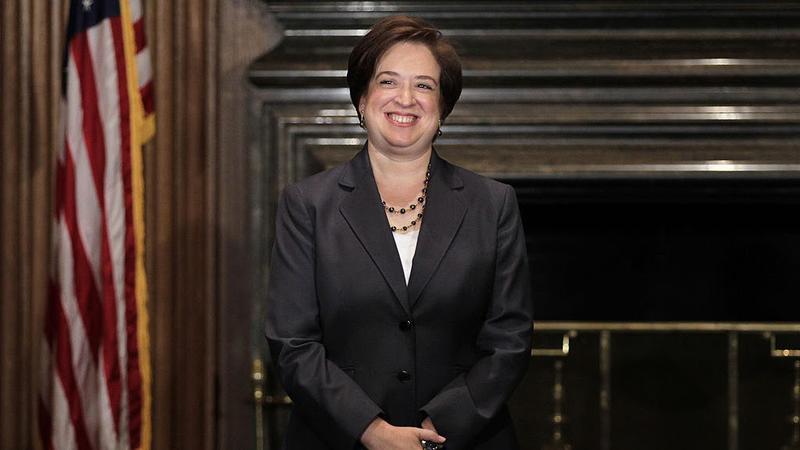
After spending some time in private practice, she taught at the Academy of Chicago Police School and Harvard Law Schoolhouse, ultimately serving every bit the Dean of Harvard Law Schoolhouse from 2003 to 2009. Earlier appointing her to the Court, President Obama nominated her Solicitor Full general of the U.s.a.. Much like Sotomayor, Kagan tends to lean liberal. She sided with the majority in several contempo landmark cases, including Rex v. Burwell, where she ruled in favor of supporting the Affordable Care Human activity, and Obergefell 5. Hodges, which legalized same-sexual activity union. Kagan'south back up of aforementioned-sex marrigae is notable in that it marked a shift from the position she expressed at her confirmation hearing.
Neil Yard. Gorsuch, Associate Justice | April 10, 2017
The start Acquaintance Justice appointed to the Supreme Court past President Donald Trump, Neil Gorsuch was sworn in on April 10, 2017. Born in Denver, Colorado, Gorsuch received a bachelor's degree from Columbia University earlier pursuing a J.D. at Harvard Law Schoolhouse. Subsequently, his legal career began in 1991 when he took upwardly a law clerk position under Judge David Sentelle of the U.s. Courtroom of Appeals for the District of Columbia Excursion. In his first brush with SCOTUS, Gorsuch clerked for Supreme Court Justices Byron White and Anthony Kennedy from 1993 to 1995 earlier setting his sights elsewhere.
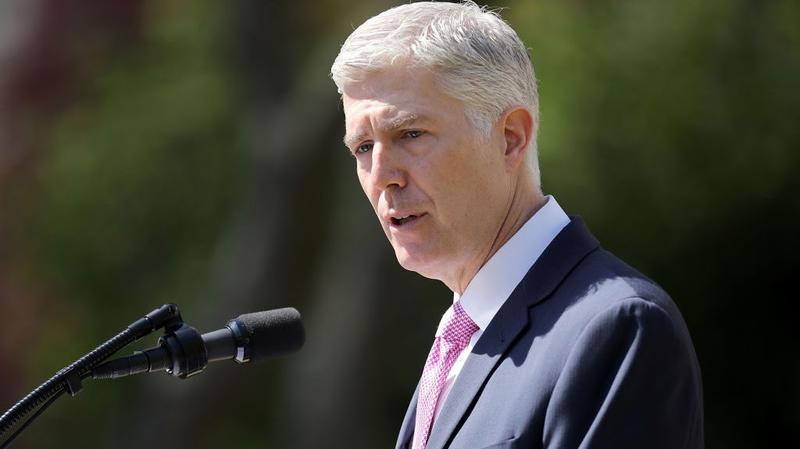
With a decade of private do under his belt, Gorsuch served as Chief Deputy Associate Chaser Full general at the U.S. Department of Justice for a year from 2005 to 2006, and, at the cease of that service, President George W. Bush appointed him to the United states Courtroom of Appeals for the Tenth Excursion. Much like Thomas, Gorsuch is a Constitutional originalist, though many political writers have deemed him more than libertarian than bourgeois, citing that he's "willing to go his own way." In his brusque time on the court, Gorsuch has sided with the majority on several important cases, including Hobby Lobby v. Sebelius, which involved upholding religious liberties related to the Affordable Intendance Act.
Brett M. Kavanaugh, Associate Justice | October 6, 2018
President Donald Trump appointed Brett Kavanaugh to the Supreme Court as an Acquaintance Justice in 2018. With allegations of sexual misconduct cropping in the wake of his nomination, Kavanaugh's appointment hearing was one of the virtually contentious in SCOTUS' history. Every bit Americans may recall from said hearings, Kavanaugh earned both his bachelor's and J.D. from Yale before serving every bit a police clerk for several prominent judges, including Gauge Walter Stapleton of the U.Southward. Court of Appeals for the Third Circuit and Justice Anthony Kennedy of the U.Southward. Supreme Court.
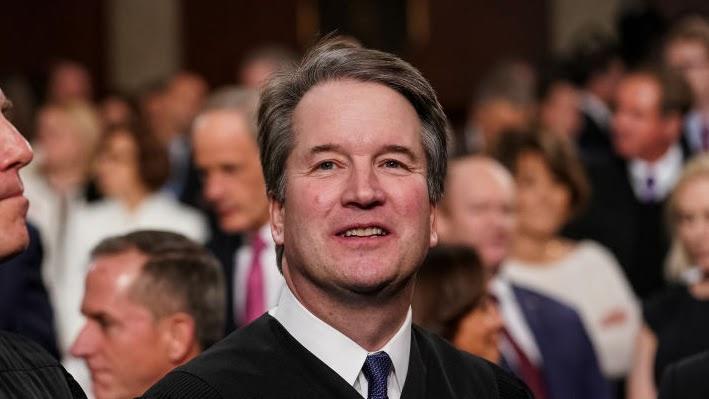
After on, Kavanaugh spent time as a partner in a D.C. police firm and then served every bit Acquaintance Counsel and Senior Acquaintance Counsel to President George Due west. Bush from 2001 to 2003, which led President Bush-league to engage him to the United States Court of Appeals for the District of Columbia Circuit in 2006. Although his time on the Courtroom just started, Kavanaugh has already authored two timely opinions related to the tech industry, including Apple tree v. Pepper and Manhattan Community Access Corp. v. Halleck, which determined a public access company isn't subject to the First Subpoena. Although many experts feared a far right shift in the Court due to Kavanaugh'south appointment, his 2019 Martin-Quinn score placed him in the conservative range by a slim margin.
Amy Coney Barrett, Associate Justice | October 27, 2020
When Justice Ruth Bader Ginsburg passed away on September eighteen, 2020, outgoing President Donald Trump wasted no fourth dimension in queuing upward a nominee for the empty Supreme Court seat, eventually landing on Amy Coney Barrett. A little over a month afterward, Barrett became the fifth woman to serve on the Supreme Courtroom of the Us. Much like Kavanaugh'due south nomination, Barrett's drew quite a scrap of controversy, though most of the criticism was leveraged against the appointment timeline rather than her qualifications.
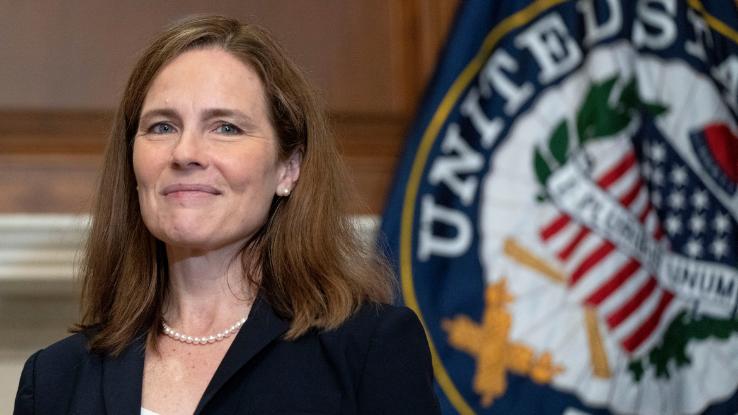
Afterward receiving a bachelor'southward from Rhodes College, Barrett attended Notre Dame Law School, where she would go along to work every bit a police force schoolhouse professor for many years. Apart from her academic path, she has clerked for Judge Laurence Silberman of the U.S. Court of Appeals for the D.C. Circuit as well as former SCOTUS justice Antonin Scalia, who likely helped inform Barrett'south originalist stance. Additionally, Barrett served fewer than iii years on the Seventh Circuit before her nomination to the highest court in the American judicial system. While Barrett joined her peers in dismissing President Trump's election challenge, some critics fear that her devout Catholicism might make landmark rulings, similar Roe v. Wade and Obergefell five. Hodges, vulnerable to change.
williamsounts1973.blogspot.com
Source: https://www.reference.com/world-view/get-to-know-nine-supreme-court-justices?utm_content=params%3Ao%3D740005%26ad%3DdirN%26qo%3DserpIndex
0 Response to "The Power of Judicial Review Allows the Supreme Court to Apex"
Post a Comment